Everest Three Pass Trek-19 Days

Trip Facts

Duration 19 Days
Max. Altitude: 5,535 m
Group size 2-14 Persons
Best Season March–May & September–November
Trip Mode Lodge & Tea houses
Activity Trekking
Meals Breakfast, Lunch, Dinner
DIFFICULTY Moderate to Challenging
LOCATION Everest Region
Start/End Kathmandu, Nepal

Highlights

    Cross all three legendary high passes: Kongma La (5,535 m), Cho La (5,420 m), and Renjo La (5,360 m)

    Visit Everest Base Camp and hike to Kala Patthar (5,545 m) for the best close-up views of Mount Everest

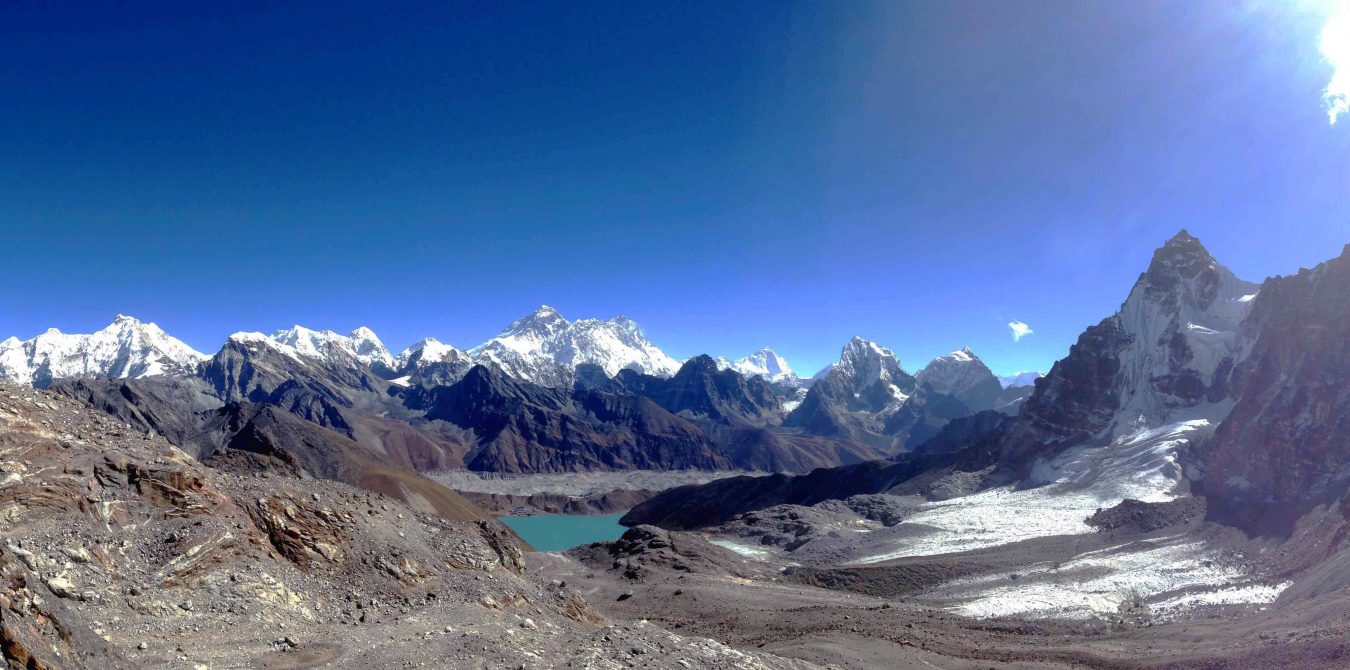
    Explore the stunning Gokyo Lakes and climb Gokyo Ri for panoramic Himalayan views

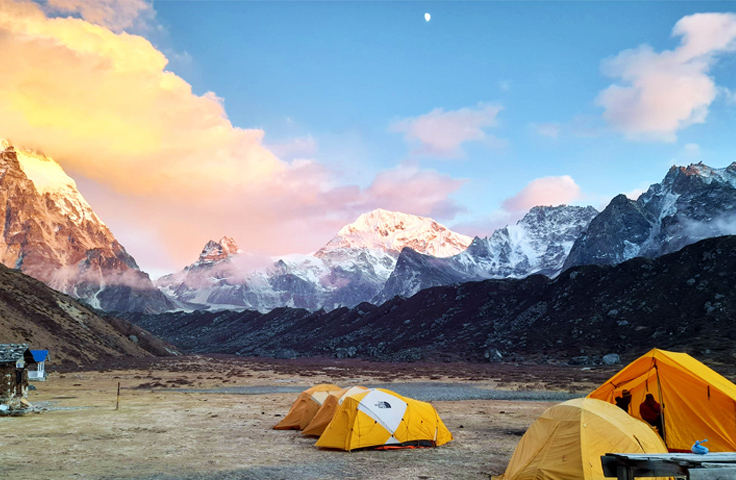
    Enjoy spectacular scenery of Everest, Lhotse, Makalu, Cho Oyu, Ama Dablam, and many other peaks

    Experience remote and less-crowded trails of the Everest region

    Walk through traditional Sherpa villages such as Namche Bazaar, Dingboche, and Thame

    Guided by experienced and professional trekking guides from Multi Peak Expedition

    A complete and adventurous Everest trekking experience in a short time frame

Overview

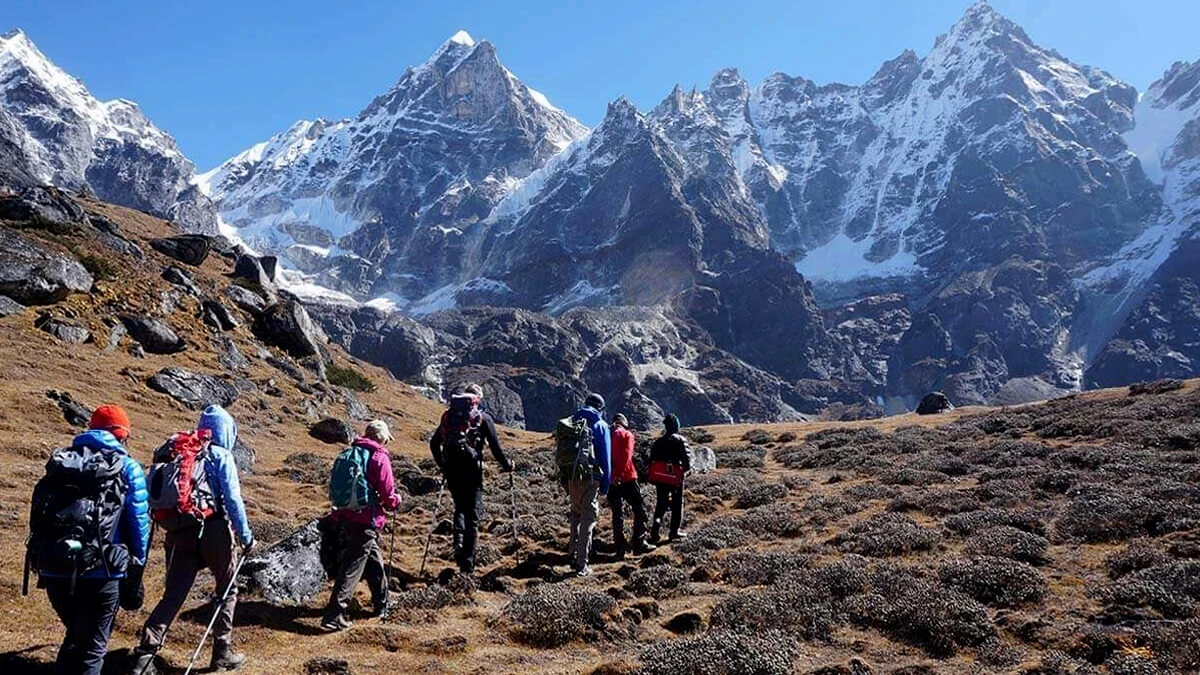
The Everest Three Passes Trek is one of the designed for experienced trekkers who want to explore beyond t most challenging and rewarding trekking adventures in the Khumbu region of Nepal. This high-altitude journey ishe classic Everest Base Camp route. The trek crosses three dramatic Himalayan passes—Kongma La (5,535 m), Cho La (5,420 m), and Renjo La (5,360 m)—while offering uninterrupted views of Everest, Lhotse, Makalu, Cho Oyu, and countless other snow-capped peaks. Remote trails, rugged terrain, and alpine landscapes make this trek a true test of endurance and determination.

The route combines several iconic destinations of the Everest region, including Everest Base Camp, Kala Patthar, and the stunning Gokyo Lakes. Trekkers walk through traditional Sherpa villages such as Namche Bazaar, Dingboche, and Thame, where ancient monasteries and local culture add depth to the adventure. Each pass crossing presents a unique challenge and reward, with panoramic viewpoints that are considered among the best in the Himalayas. Proper acclimatization and a gradual pace are essential, as the trek remains above 4,000 meters for many days.

Overall, the Everest Three Passes Trek is ideal for those seeking a comprehensive and less-crowded Everest experience. It demands good physical fitness, prior high-altitude trekking experience, and strong mental resilience. In return, trekkers are rewarded with raw mountain wilderness, diverse landscapes, and a deep sense of achievement. This trek is often regarded as the ultimate Everest region adventure for serious hikers and mountain lovers.

Itinerary

We will pick you up at the airport and transfer you to your hotel where we will brief you on your upcoming trek. Feel free to explore the surrounding area today or catch up on your sleep before your early morning flight.

Altitude Gain 1,400 m
Accommodation Hotel in Kathmandu
Meal Breakfast, Lunch, Diner

Wake up early for an amazing mountain-filled flight into one of the highest airports in the world! After meeting your local crew and being awed by the airstrip you just landed on, set off on a trail that takes you past a monastery, over a suspension bridge, and into the heartland of the Sherpa people.

We stop for the first night at Phakding, about a 3 hours hike from Lukla.

Altitude Gain 2640m
Accommodation Overnight stay at a lodge Phakding
Meal Breakfast, Lunch, Diner

After breakfast start trekking with both ascents and descents to reach the market town of Namche Bazaar.  The trail takes us to the entrance of Sagarmatha National Park, over some more suspension bridges, and through rhododendron forests.

Tonight, we sleep in the biggest Sherpa town in the region – bustling with trekkers and climbers and locals going about their business.

Altitude Gain 3440m
Accommodation Overnight at Namche Bazaar
Meal Breakfast, Lunch, Diner

Today is a day to let the body acclimatize as we have risen quickly to this altitude.  The best way to acclimatize is to be active.  Either be exploring Namche or better still, taking a walk in the neighborhood.  Head for the Everest View Hotel for your morning coffee!  You might come across people who have helicoptered in for breakfast with a view! And what a view it is – majestic Mt. Everest as the name suggests.

You might want to continue on to Khumjung village, home to  Khunde Hospital and Khumjung School.  Both were built in the 1960s by Sir Edmund Hillary.  Here you also find Khumjung Monastery which dates back hundreds of years although was reconstructed after the 2015 earthquake.  Today, as in the past, it is the center of Sherpa’s religion and culture. Allegedly there is a Yeti scalp inside the monastery!

Finally, stock up on any snacks you might want to take with you – the last shopping opportunity of the trek!

Accommodation Overnight at Namche bazar
Meal Breakfast, Lunch, Diner

Tengboche village is home to Tengboche monastery, which boasts some of the most spectacular views of Everest and Lhotse! The route heads out across the Dudh Koshi River and through thick forests which gradually thin out as you cross the tree line.  As this is a Buddhist monastery there are stupas and mani (prayer) walls along the way.

There is an opportunity to attend prayers with the monks as well as take in the astounding views before retiring for the night in the village.

Altitude Gain 3,860 m
Accommodation Overnight at Tengboche
Meal Breakfast, Lunch, Diner

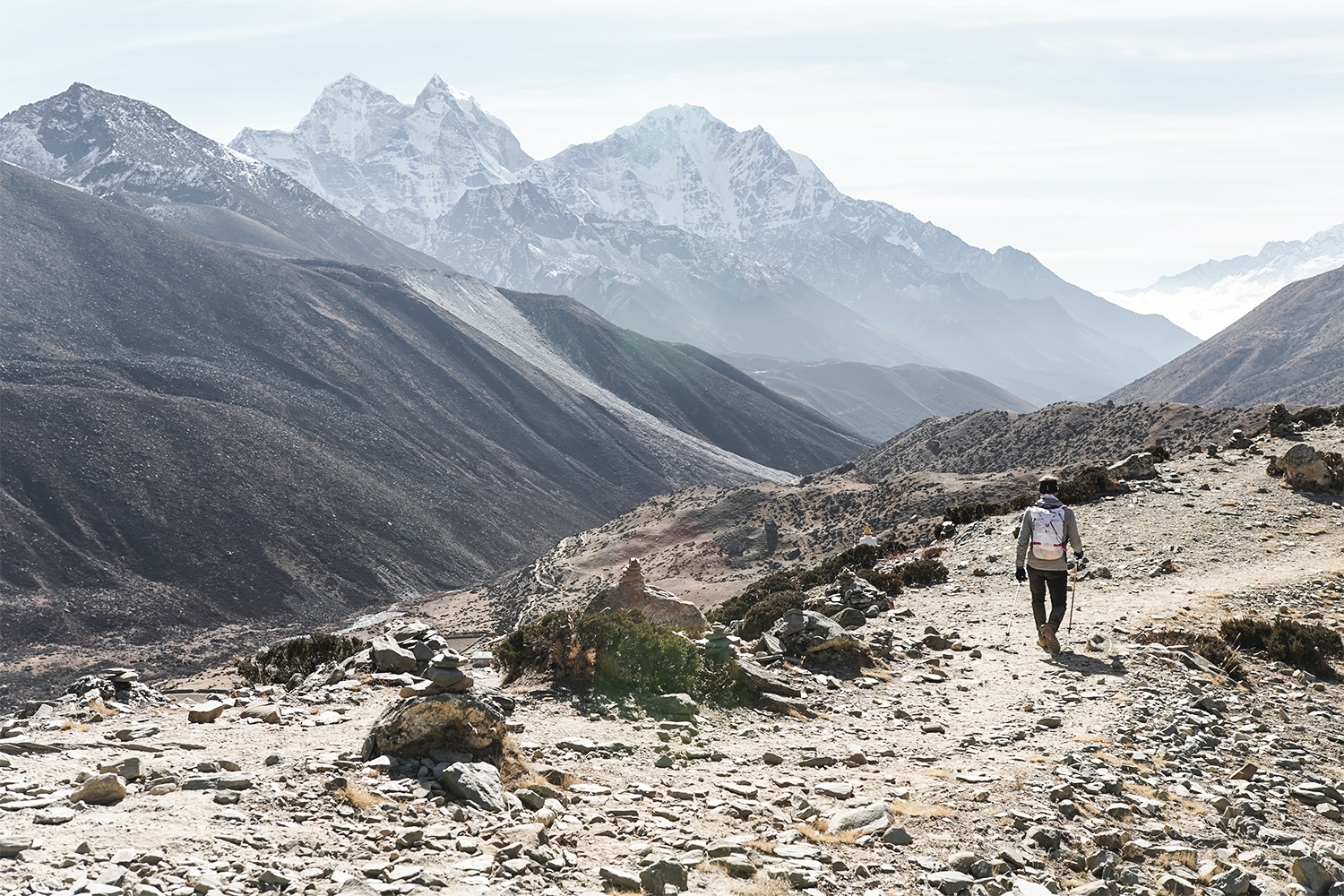
The trail is rugged and there are few trees on this windy trail between Tengboche and Dingboche villages.  With Ama Dablam towering above, the trail enters the Imja Valley where it descends to the Lobuche River before rising steeply up to Dingboche.

This lovely village has fields surrounded by stone walls to protect the high-altitude crops from grazing animals and the wind.  And quite a few lodges!

Altitude Gain 4,410
Accommodation Overnight at Dingboche
Meal Breakfast, Lunch, Diner

Another acclimatization day to aid with the rise in altitude and once again we suggest you keep active!  What better way to spend the time than by hiking to a viewpoint at Nagarjune Hill (5083m) – a round trip of around 4 to 5 hours.  The views are, naturally, worth the effort!  Periche Valley lies below and above lies Ama Dablam, Thamserku, Lobuche East and Lobuche West, among others.

Altitude Gain 5083m
Accommodation overnight at Dingboche
Meal Breakfast

Take a short and easy walk to Chhukung(4700m), the last village before Island Peak. Enjoy view of glaciers and the towering south face of Lhotse.

Altitude Gain 4700
Accommodation overnight at Chhukung

Start early to cross Kongma La Pass (5,540 meters), the highest of the three passes. After enjoying the breathtaking views, descend to Lobuche (4,940 meters). This is a challenging day with 6–7 hours of walking.

On leaving Gorakshep in the early morning we hike along the Khumbu Glacier to Everest Base Camp. This iconic location is actually different from the one climbing expeditions use.  But we can see their colourful tents nearby –  but far enough away that trekkers do not disturb them in their arduous preparations.

Returning to Gorakshep for breakfast we then set out for Dzongla where we stay overnight.

Accommodation overnight at Gorakshep

Climb Kala Patthar (5,550 meters) early in the morning for the best sunrise view over Mount Everest. Then descend to Gorakshep for breakfast and continue to Dzongla (4,830 meters). Trekking time is around 5 hours.

Accommodation Overnight stay at a lodge in Dzongla.
Accommodation Overnight stay at a lodge in Thangnak

A short and scenic trek of about 3 hours takes you to Gokyo (4,770 meters), nestled beside the third turquoise Gokyo Lake.

Altitude Gain 4770m
Accommodation Overnight stay at a lodge in Gokyo.

Early morning climb to Gokyo Ri (5,360 meters) for stunning views of Everest, Lhotse, Makalu, and Cho Oyu. The round trip takes about 4.5 hours. Return to Gokyo and enjoy the rest of the day exploring or resting.

Altitude Gain 5360m
Accommodation Overnight stay at the lodge in Gokyo.

Cross Renjo La Pass (5,360 meters), the final and one of the most spectacular passes. After enjoying views of the Gokyo lakes and surrounding peaks, descend to Lungdeng (4,600 meters). The trek takes about 5 to 6 hours.

Altitude Gain 5360m
Accommodation Overnight stay at a lodge in Lungdeng.

Continue your descent through the remote Bhote Koshi Valley, passing Sherpa villages like Marlung and Thame. Reach Namche Bazaar after around 7 hours of trekking.

Accommodation Overnight stay at a lodge in Namche Bazaar.

Retrace your steps through Phakding, Monjo, and other villages as you complete your final trekking day back to Lukla. The walk takes around 7 to 8 hours.

Accommodation Overnight stay at a lodge in Lukla.

Catch an early morning flight from Lukla to Kathmandu or Ramechhap (approx. 35 minutes). Upon arrival, transfer to your hotel.

Accommodation Hotel in KTM

Cost Details

Includes

    Airport pickup and drop-off in Kathmandu

    Domestic flights: Kathmandu – Lukla – Kathmandu

    All required trekking permits (Sagarmatha National Park Permit & Khumbu Local Permit)

    Professional English-speaking trekking guide from Multi Peak Expedition

    Porter service (as per group size)

    Accommodation in teahouses/lodges during the trek

    Three meals per day during the trek (Breakfast, Lunch, Dinner)

    Guide and porter insurance, salary, food, and accommodation

    First-aid medical kit during the trek

    Trek briefing and route support

Excludes

    International airfare to and from Nepal

    Nepal entry visa fee

    Hotel accommodation and meals in Kathmandu

    Personal trekking equipment and gear

    Travel and high-altitude rescue insurance

    Personal expenses (laundry, phone calls, snacks, etc.)

    Hot showers, Wi-Fi, battery charging during the trek

    Alcoholic and bottled drinks

    Tips for guide and porter (expected but optional)

    Any extra cost due to flight delays, weather, or emergency situations

Equipment

Here is a list of what you might want to pack for the hike. Please take this as a starting point. You’ll need layers of warmer clothing during the winter. We provide a 75 liter duffel bag for you to use for the trek. It will be given to you during your pre-trip meeting in Kathmandu. The duffle bag is yours to keep. Also, you can rent sleeping bag and down jacket with us at the additional fee of USD 35 for each once you are in Kathmandu.

 Clothing

    Thermal base layers

    Trekking pants

    Fleece jacket or down sweater

    Waterproof jacket and pants

    Long and short-sleeved trekking shirts

    Underwear and socks

    Lightweight gloves and warm insulated gloves

    Sun hat and warm beanie

    Buff or scarf

    Gaiters

    Waterproof trekking boots

 Sleeping and Camping

    Sleeping bag rated −10°C to −15°C

    Sleeping mat

    Tent if camping

 Trekking Gear

    Daypack 25–35 L

    Trekking poles

    Water bottles or hydration system

    Water purification tablets or filter

    Headlamp with extra batteries

    Sunglasses with UV protection

    Sunblock and lip balm

    First aid kit

    Personal hygiene items

    Toilet paper

 Accessories

    Passport and visa copies

    Travel insurance

    Cash in Nepalese Rupees

    Camera and extra batteries

    Mobile phone and power bank

    Notebook and pen

 Optional High-Altitude Gear

    Crampons or microspikes

    Ice axe

    Heavy down jacket

    Extra thermal socks and gloves

    Sunglasses with side protection

 Snacks

    Energy bars and trail mix

    Electrolyte powder

    Tea or instant coffee

FAQ's

The Everest Three Passes Trek is very challenging. It involves long trekking days, high altitude above 5,000 meters, and crossing three high mountain passes. Multi Peak Adventure recommends this trek only for trekkers with previous high-altitude trekking experience and good physical fitness.

Yes, it can be safe only for experienced trekkers with prior acclimatization. This is a fast-track itinerary, guided by professional guides from Multi Peak Adventure, but it is not suitable for beginners.

The best seasons are:

  • Spring (March to May) – stable weather and clear views

  • Autumn (September to November) – best visibility and dry trails

Multi Peak Adventure does not recommend trekking during monsoon or winter for this route.

Yes. Multi Peak Adventure strongly recommends prior high-altitude trekking experience (above 4,000 m). This trek is not suitable for first-time trekkers.

Review Requests

Enter a recent customer’s contact info and we’ll ask them to leave you a review.

Hear It from Travelers
We go beyond just booking trips—we create unforgettable
travel experiences that match your dreams!
People recommend us.
We Accept

All emails to Multi Peak Adventure is requested to be sent to only info@multipeakexpedition.com to receive the valid response. CopyRight © 2026. All Rights reserved at Multi Peak Adventure

Site By: Web Creation Nepal

×

Type above and press Enter to search. Press Close to cancel.