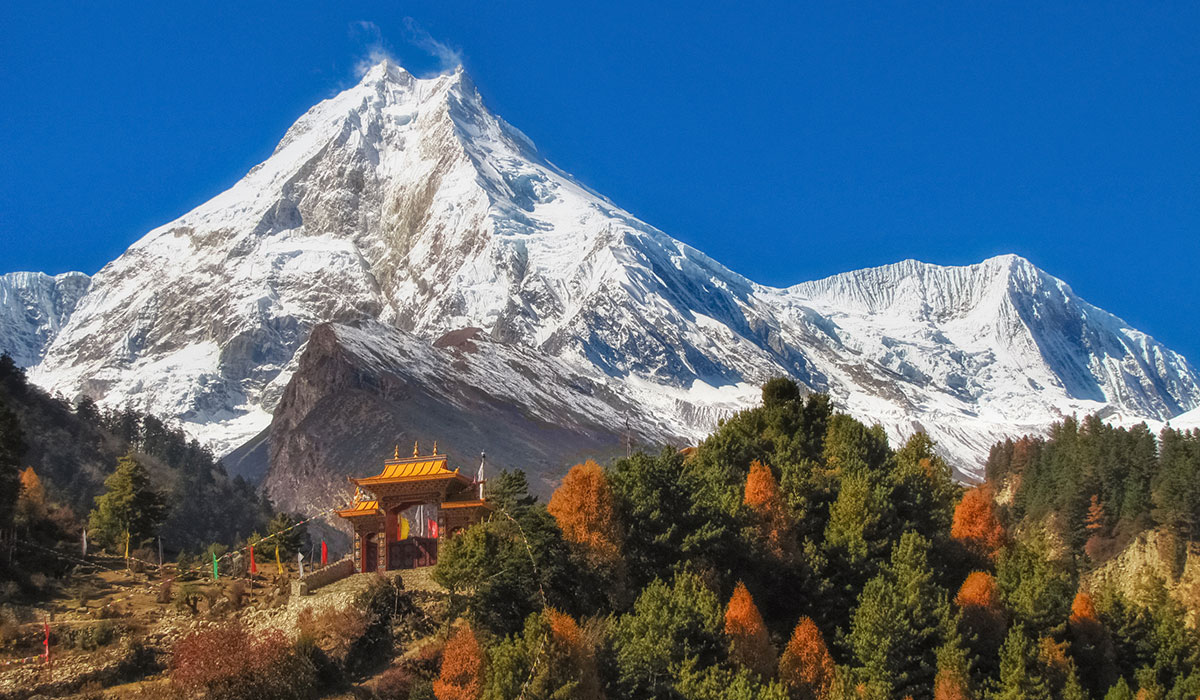
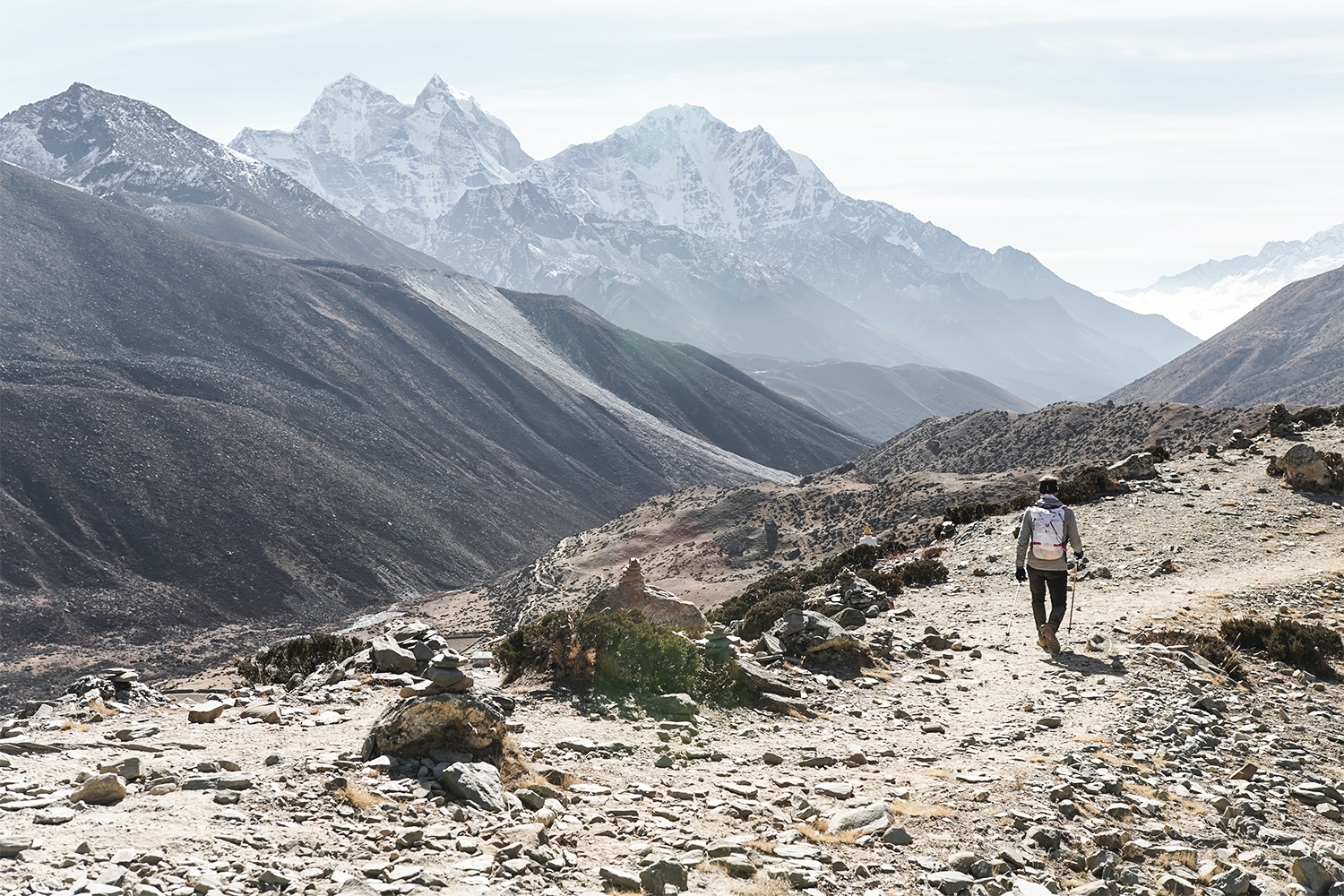
The Manaslu Expedition is one of Nepal’s most prestigious high-altitude expeditions, offering climbers the opportunity to summit Manaslu (8,163 m), the eighth-highest mountain in the world. Located in the Gandaki Province of Nepal, the expedition combines challenging trekking through remote Himalayan landscapes, cultural immersion in traditional villages, and high-altitude technical climbing.
The journey begins in Kathmandu, where climbers finalize permits, equipment, and logistics with MultiPeak Expedition, and glacial valleys. This gradual ascent allows proper acclimatization, essential for a safe and successful summit attempt.
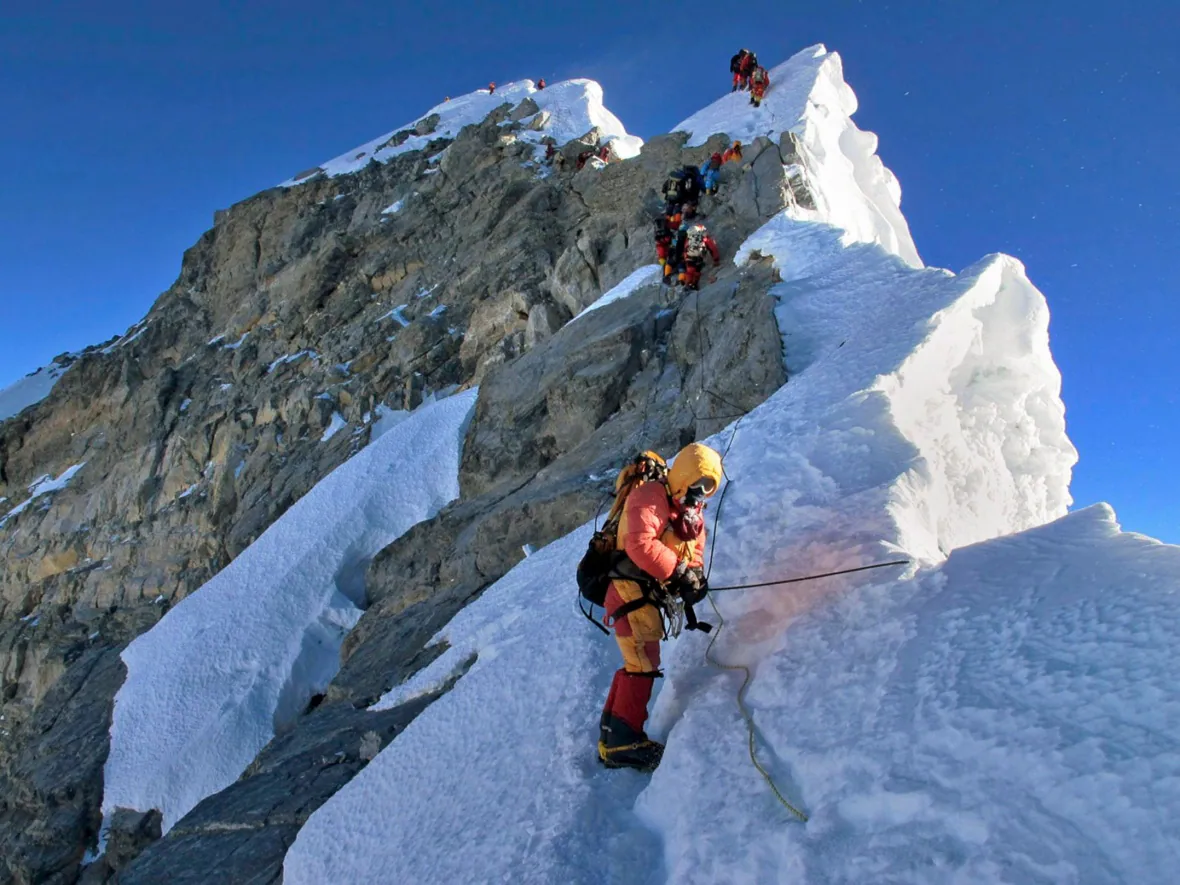
Climbing Manaslu is a high-altitude technical challenge requiring glacier travel, ice and snow climbing, crevasse navigation, and high-altitude endurance. The expedition uses a series of Base Camp and High Camps to prepare climbers for the summit push. Experienced guides and support staff from MultiPeak Expedition ensure climbers are supported throughout the journey.
Beyond the summit, the expedition provides breathtaking Himalayan scenery, including views of Himalchuli, Ngadi Chuli, and Shringi Himal, while offering insight into local culture and remote Himalayan communities. The Manaslu Expedition is ideal for experienced mountaineers seeking a world-class 8,000-meter adventure.
Begin your journey with a scenic drive from Kathmandu to Besishahar. The drive follows the Prithvi Highway alongside the Trishuli River before entering the Marsyangdi Valley. Terraced farms, rivers, and rural settlements offer beautiful countryside views. Overnight at a lodge in Besishahar.
Continue the journey with an off-road drive along the Marsyangdi River to Dharapani. The road becomes rough and adventurous as it climbs through waterfalls, forested hills, and small Gurung villages. Dharapani is a key junction between the Annapurna Circuit and Manaslu trails.
Begin trekking from Dharapani along forested trails with views of Manaslu and surrounding peaks. The path gradually ascends through pine and rhododendron forests. Small settlements and prayer flags mark the trail as you approach Gowa, a peaceful mountain village surrounded by alpine scenery.
Today’s trail climbs steadily toward Bimthang, a stunning alpine meadow surrounded by snow-capped peaks and glaciers. The landscape opens dramatically, offering panoramic views of Manaslu, Himlung, and nearby peaks. Bimthang is one of the most scenic overnight stops on this route.
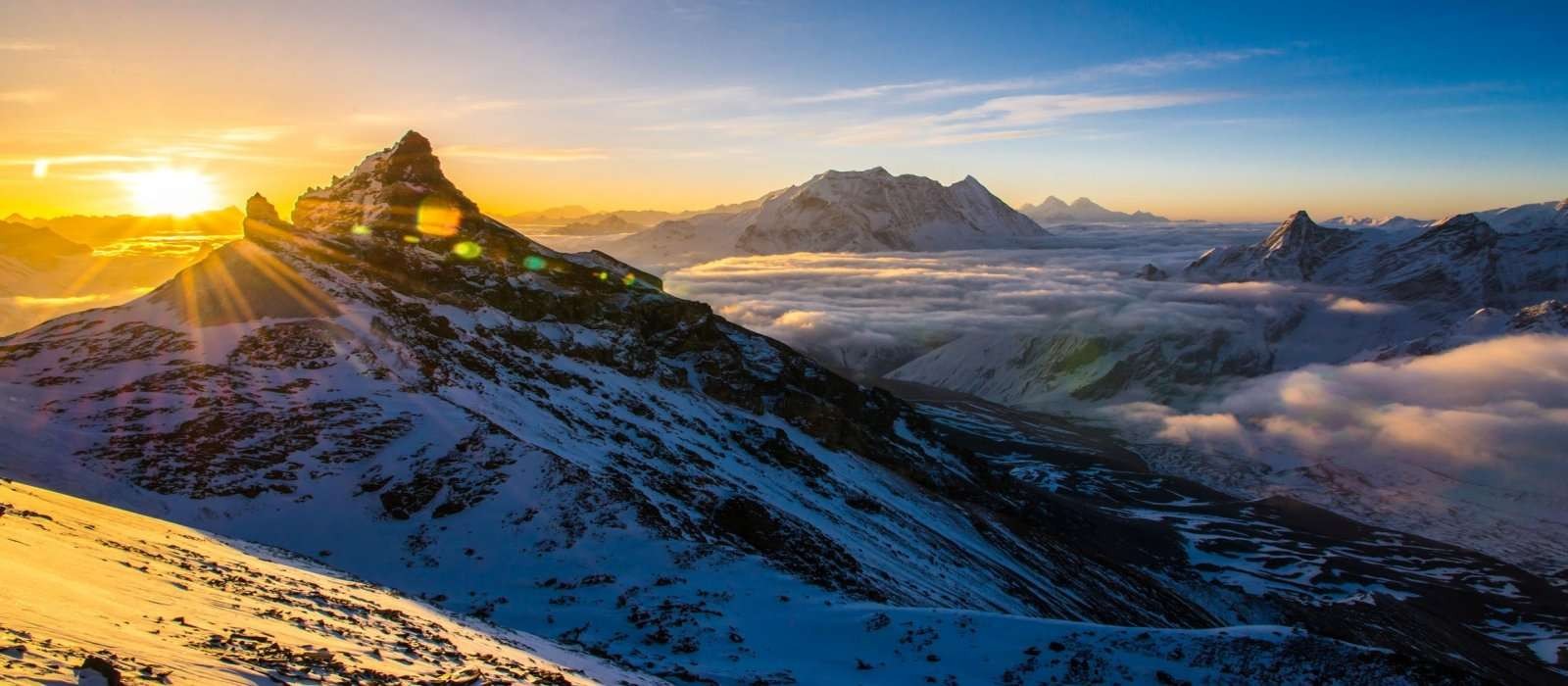
An early morning start for the challenging crossing of Larke Pass (5,106m). The ascent is gradual but demanding, passing glacial moraines and snowy ridges. From the top, enjoy spectacular views of Manaslu, Cheo Himal, and Annapurna II.
After crossing the pass, descend carefully toward Samdo village, a traditional Tibetan-influenced settlement near the Tibetan border. This is a long but highly rewarding day.
A shorter trekking day from Samdo to Sama Gaun. The trail follows wide yak pastures and glacial rivers with magnificent views of Manaslu’s north face. Sama Gaun is a beautiful stone village with monasteries and mountain scenery.
Trek from Sama Gaun toward Manaslu Base Camp, ascending through rocky moraine paths and glacial terrain. The towering north face of Mount Manaslu becomes increasingly dramatic as you approach base camp.
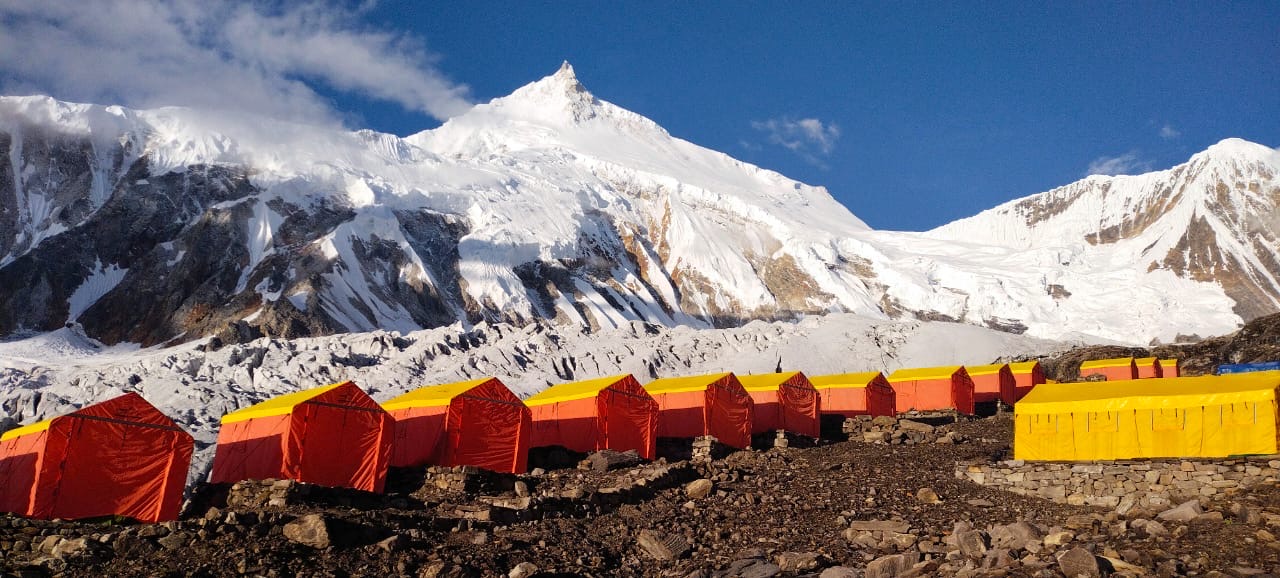
Base Camp sits beneath massive ice walls and offers breathtaking views of glaciers and surrounding Himalayan giants. Overnight at tent camp if part of expedition, or return to Sama Gaun depending on program.
rest day
Climbers spend the day resting and preparing at Manaslu Base Camp. The team practices basic mountaineering skills such as using crampons, ice axes, and fixed ropes. Guides also review safety techniques and glacier travel. This training helps climbers become familiar with the terrain and equipment.
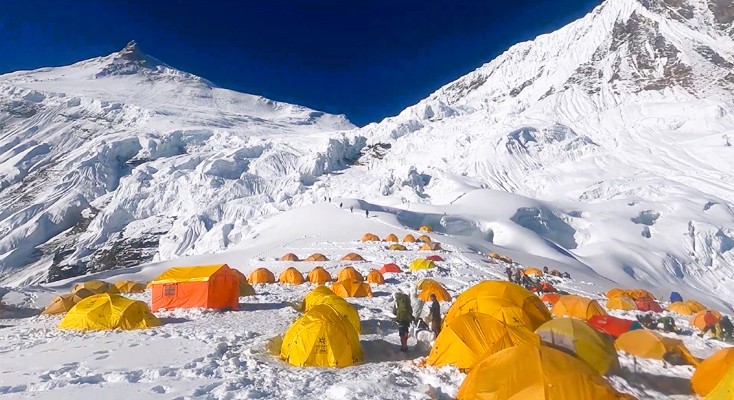
The expedition begins the first rotation. Climbers leave Base Camp early in the morning and cross the Manaslu Glacier. The route includes snow slopes and crevasses. After several hours of climbing, the team reaches Camp I and spends the night there.
After breakfast, the team climbs higher toward Camp II. The route becomes steeper with sections of fixed ropes. Climbers move slowly to conserve energy and adjust to the altitude. After reaching Camp II, they rest and stay overnight.
This day is dedicated to acclimatization. Climbers may hike slightly above Camp II and then return. This “climb high, sleep low” method helps the body adapt to the thin air at high altitude.
Move to Camp II → Camp III → Camp IV (7,400m) Summit (8,163m) → Descend to Base Camp.
The team descends from Camp II to Base Camp. Descending helps the body recover and regain strength after several days at high altitude.
A full rest day is scheduled. Climbers relax, eat nutritious food, and regain energy. Expedition leaders check weather conditions and plan the next rotation.
The second rotation begins. Climbers again trek from Base Camp to Camp I, moving more comfortably because the body is already partially acclimatized.
The team climbs again to Camp II. Because of earlier acclimatization, climbers usually feel stronger during this climb.
This time climbers stay overnight at Camp III. Spending a full night here is important preparation for the summit push.
After breakfast, climbers descend all the way back to Base Camp. The rotation is now complete, and the team waits for a good weather window for the summit attempt.
Climbers take a full rest at Manaslu Base Camp. Equipment is checked carefully, oxygen cylinders are prepared, and guides study the weather forecast. Proper rest is important before the final climb.
Climbers continue toward Camp II. The route includes steep snow slopes and fixed ropes. After arriving at Camp II, climbers rest and prepare for the next day’s climb.
Climbers continue their ascent to Camp III. The thin air makes climbing slower and more challenging.
Camp IV is the final high camp before the summit. Climbers spend the afternoon resting, hydrating, and preparing for the summit climb.
Climbers start their summit push around midnight. The climb is long and demanding but offers breathtaking views of the Himalayan range.
After reaching the summit of Mount Manaslu, climbers take photos and celebrate briefly before descending safely back to Camp IV or Camp III.
The team descends to Camp II to reduce exposure to extreme altitude.
Climbers descend all the way back to Base Camp where the expedition team celebrates the successful climb.
These days are used for resting and cleaning the Base Camp area to maintain environmental responsibility.
These days are used for rest and environmental cleanup at Base Camp.
Return to Kathmandu by jeep or bus.
A free day for rest, sightseeing, or shopping in Kathmandu after the expedition.
Transfer to the international airport for your departure flight, concluding the unforgettable Manaslu Expedition.
Here is a list of what you might want to pack for the hike. Please take this as a starting point. You’ll need layers of warmer clothing during the winter. We provide a 75 liter duffel bag for you to use for the trek. It will be given to you during your pre-trip meeting in Kathmandu. The duffle bag is yours to keep. Also, you can rent sleeping bag and down jacket with us at the additional fee of USD 35 for each once you are in Kathmandu.
Enter a recent customer’s contact info and we’ll ask them to leave you a review.
All emails to Multi Peak Adventure is requested to be sent to only info@multipeakexpedition.com to receive the valid response. CopyRight © 2026. All Rights reserved at Multi Peak Adventure
Site By: Web Creation Nepal